Category:

Investment Strategies

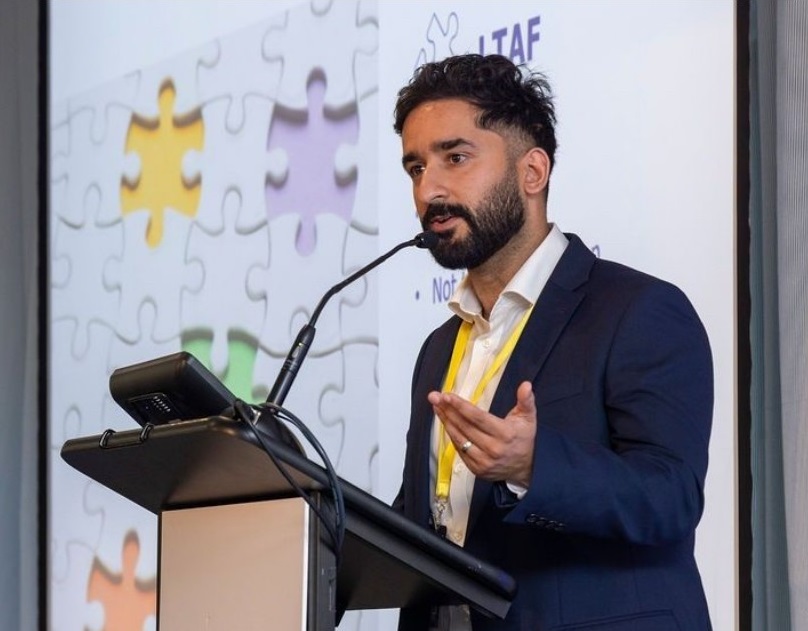
Joshun Sandhu: Master Trusts utilising Private Markets

Joshun Sandhu provides a breakdown of how private market access is re-shaping the Defined Contribution market


Master trusts and private capital

Master trust pension schemes are being encouraged to allocate to long term private assets while continuing to meet strict governance and daily member liquidity requirements. Trustees must decide whether to access private markets through regulated pooled funds such as Long Term Asset Funds (LTAFs), create fully bespoke solutions, or adopt a hybrid approach that blends elements of both. Each route carries distinct implications for governance, costs and operations, and the choice will shape the long-term risk and return profile of members’ retirement savings.

Liquidity and structural expertise

Daily liquidity remains a defining constraint. Members expect to trade their pots every day and administrators are set up to deliver that functionality. Introducing an asset that does not trade daily can create operational issues and potential regulatory concerns over what a member is allowed to buy. Trustees therefore need solutions that fit within existing administration systems or can be blended to provide overall daily liquidity.

Structural expertise is critical. While trustees focus on investment strategy and member outcomes, the technical design of pooled funds, insurance wrappers and hybrid platforms typically requires input from consultants, lawyers and specialist providers. Trustees should not be expected to master every structural nuance, but they do need enough understanding to evaluate advice and make informed decisions.

A fast changing market backdrop

The market environment is evolving rapidly. Industry consolidation among platforms, innovation such as Smart and Octopus Energy, new master trust announcements from providers such as Hargreaves Lansdown and Schroders, and the possibility of further master trust mergers are creating both opportunities and uncertainty. Regulatory support for LTAFs and a growing pool of providers is opening new pathways to private capital. At the same time, government ambitions to increase scale in defined contribution pensions are being positioned as a way to improve private market access, although scale alone does not guarantee better outcomes.

This combination of regulatory encouragement and commercial activity risks narrowing trustee choice if the market converges on a small number of standardised solutions. Pressure to adopt an LTAF quickly could lead to sub optimal outcomes if strategies are rushed to market or if managers prioritise launching a vehicle before finalising an investment approach. Trustees should test whether new products genuinely meet member needs rather than simply following regulatory signals.

The appeal and limits of LTAFs

LTAFs are FCA authorised open ended funds designed to hold less liquid assets. They offer a familiar governance framework, diversification through pooled assets and professional management for schemes of all sizes. Their regulated status makes them accessible and operationally easier for many trustees.

However, familiarity does not automatically equal safety. Liquidity management is complex and managers may be more experienced at running semi liquid structures than at investing directly in private markets. The manager, not the trustee, is responsible for balancing inflows and redemptions, so due diligence on both the investment strategy and the liquidity process is vital. Trustees must also decide how to communicate redemption policies and valuation practices. In many cases the best approach is to package the investment within a simple solution that focuses on the positive member outcomes rather than technical details that may confuse or alarm savers.

Bespoke and blended solutions

Bespoke solutions include segregated mandates, custom pooled funds and unit linked insurance wrappers. A unit linked platform allows trustees to consolidate investments in one place. These structures can be tailored for liquidity, fees and governance and can align closely with member needs if designed cost effectively. All master trusts have the theoretical scale to consider bespoke options, but implementation demands specialist expertise and significant governance capacity. The trade off is longer lead times and higher operational complexity compared to an off the shelf LTAF.

For many schemes a hybrid model will be the most practical. A modest LTAF allocation can provide diversified private market exposure, while a separate sleeve of strategic assets might be held through a segregated mandate or insurance platform. Listed real estate investment trusts or other liquid private market proxies can provide daily pricing and income to support member trading requirements. Blending different structures is not merely a compromise but a necessary way to integrate private assets into a daily dealing environment. Trustees will need clear rules on switching, liquidity management and member communications to keep the solution transparent and fair.

Governance first

Success in private capital investing depends as much on governance as on investment returns. Trustees should start by clarifying their objectives and defining the role of private assets within the default strategy. They need to stress test redemption policies, determine how much illiquidity can be tolerated and evaluate costs at both the investment and administrative levels. Communication remains central. Trustees must explain to members why private assets are being used and how the chosen structure protects their interests, while avoiding unnecessary complexity in messaging.

Long term private assets can enhance diversification and help master trusts deliver better risk adjusted outcomes for members. LTAFs, bespoke structures and hybrid approaches each have merits, but no single solution fits all. Innovation in platform technology and unit linked wrappers is expanding the menu of options, yet governance and clarity of purpose remain paramount. Trustees who match structure to objectives, seek expert advice and maintain rigorous oversight will be best placed to harness private capital for the benefit of their members over the next decade.


By 0 Comments

Laura Catterick, Commercial Director | Mobius

How open architecture life wrappers are redefining pension strategy

First published on pensionprofessionals.com


Laura Catterick says this evolving model can offer an attractive path forward


Laura Catterick, Commercial Director | Mobius

Image: Laura Catterick, Mobius: The future of pension investing will be defined by structures that are open, adaptable, and rigorously governed

Rethinking investment access – why open architecture and life wrappers are redefining pension strategy

In today’s complex and cost-sensitive investment environment, pension schemes and wealth managers face a challenging dilemma. We are all expected to deliver better member outcomes, reduce fees, meet increasingly rigorous regulatory requirements, and respond dynamically to market developments. These pressures are especially acute for mid-sized and smaller schemes, which often lack the resources and scale to compete with larger institutional investors.

A compelling solution is emerging at the intersection of open architecture platforms and the use of life company fund structures. Together, they are creating new pathways for trustees, wealth managers, and pension providers to deliver value, reduce friction, and align with public policy goals.


Delivering true investment flexibility

Conventional platforms are often encumbered by limitations. They rely on proprietary fund menus or are tied to the investment preferences of a sponsoring institution. This model restricts the ability of advisers and fiduciaries to curate truly whole of market strategies aligned with specific scheme objectives, whether that’s cashflow-matching for maturing DB schemes, or building diversified private market exposure in a DC environment.

Open architecture platforms stand in stark contrast. By giving clients access to a wide universe of fund managers, asset classes, and wrappers, they offer a far more flexible toolkit. Mobius, one of the leading UK examples, supports over 900 funds across accumulation and income mandates, from more than 80 asset managers. Its independence means there is no inherent bias toward particular strategies or asset managers. Selection is purely needs-based and client-led.

This model enables greater choice and better outcomes. Advisers can tailor portfolios using best-in-class solutions. Trustees can build governance-friendly, multi-asset blends with better fee transparency. And critically, both can respond more nimbly to macroeconomic change and emerging investment trends.


Expanding access through life wrappers

While open architecture creates optionality, life wrappers bring structure, simplicity, reduced costs and efficiency of execution. The life fund format – long used in insurance-based pension solutions – offers several key advantages for schemes and providers alike.

First, it enables tax-efficient investing, particularly for overseas assets. Mobius’ own analysis shows that unit-linked pension funds can significantly outperform comparable unit trusts, largely because of lower withholding taxes and reduced embedded costs.

Second, life wrappers provide a pooled vehicle through which even smaller schemes can access sophisticated strategies. Rather than bearing the operational and legal complexity of investing in private equity or infrastructure directly, schemes can gain exposure via the life-wrapped fund managed by an authorised provider. Mobius has played a key role in this space by helping launch and seed the first Long-Term Asset Funds (LTAFs), which are increasingly being integrated into blended funds and default DC solutions.

Third, life funds are fully regulated and benefit from strong governance. In the Mobius model, this includes due diligence on managers, liquidity assessments, valuation scrutiny, and oversight aligned with FCA and PRA standards. This gives everyone involved confidence while easing administrative burden.


Meeting the moment: policy, reform, and alignment

The UK pensions landscape is undergoing meaningful reform. The Mansion House Accord sets out a commitment to investing more in private markets and long-term productive assets. This is further supported by the Pensions Investment Bill, which seeks to remove barriers and encourage schemes to invest in ways that support UK economic growth.

These reforms align closely with the benefits offered by life wrappers and open architecture platforms. By making infrastructure, private credit, and growth equity funds accessible to a broader range of schemes, these structures unlock the potential for greater pension engagement with productive capital. Meanwhile, the ability to wrap complex assets in a regulated, tax-efficient format ensures alignment with both fiduciary responsibilities and permitted-link regulations.

This is not just about headline-grabbing reforms at the national level. For wealth managers and smaller schemes, it’s a question of capability. The policy direction is clear: pensions must play a more active and innovative role in the economy. But without the right infrastructure, it’s hard for smaller actors to participate. Mobius’ structure addresses this gap by combining institutional-quality oversight with operational simplicity.


A future-ready investment model

There’s a reason why life wrappers and open architecture are gaining traction not just in the pensions sector, but also among charities, endowments, and family offices. These models offer a powerful blend of regulatory certainty, cost control, and strategic flexibility. They support everything from passive equity allocations to bespoke private market mandates. They reduce the friction associated with custody, dealing, and tax. And they enable trustees and advisers to construct portfolios that are truly outcome-focused.

For private wealth managers, pension schemes, and product providers looking to improve client outcomes while managing their own regulatory risk, this evolving model offers an attractive path forward. It is cost-efficient, operationally light, and compatible with the long-term goals of both policymakers and savers.

The future of pension investing won’t be dictated by one-size-fits-all models or outdated platforms. It will be defined by structures that are open, adaptable, and rigorously governed. Those embracing open architecture and life-wrapped solutions today are positioning themselves not just for compliance, but for leadership.

By 0 Comments

Children playing with building blocks | Mobius

LDI on platforms – does one size fit all?

Following the Liability Driven Investment (LDI) turbulence last year, there have been multiple interventions from regulators and parliamentary committees to understand the causes of the spike in collateral calls – and work is still underway which is likely to see further regulation of the sector.

Despite the noise surrounding LDI, it is interesting to note that the basic concept of pension schemes matching their assets and liabilities continues to make sense. The questions now are far more about the use of leverage, the need for collateral buffers and whether leveraged LDI remains appropriate for all schemes.

In reality there are still a huge number of UK schemes using LDI as an integral part of their investment strategies as DB schemes mature – and as the dust settles, demand remains for DB schemes to access high quality LDI funds to meet their needs.

We all know that pension schemes have different investment strategies and approaches to meeting their obligation to pay members’ pensions.  Some schemes are better funded than others, some are more mature with different cashflow profiles, and an increasing number are on a flightpath to buy in/buy-out.

This inevitably means there is a demand for a wide range of different styles of LDI funds with different investment strategies.

That’s why the team at Mobius seek to provide exposure to LDI funds from several managers via the platform.  We believe we are unique in that we currently host over 100 LDI funds on the platform across 5 LDI managers.

Not all platforms have this breadth of LDI offerings and restrict schemes to a narrow portfolio of LDI funds or even only to in-house funds.  We believe this approach reduces choice and flexibility and is another reason why schemes continue to choose Mobius as their investment administration provider.

Thank you for reading this blog, to find out more about Mobius, please visit our home page.

By 0 Comments

Sky light in office building with plants on shelf in the light | Mobius

Collateral waterfalls for LDI

There’s no doubt that managing the spike in Liability Driven Investment (LDI) collateral calls last September was a challenge for all of us – whether trustees, asset managers, consultants, or platforms.  Like many in the industry, we’ve been talking to interested parties to understand how we can improve our proposition to meet the requirements of the LDI market for 2023 and beyond.

One initiative we’ve introduced at Mobius is automated collateral waterfalls, where our clients nominate in advance which funds will be used to meet future calls and in which order.

This means we can automatically use the agreed fund to meet calls without the delay of awaiting instructions – and if the agreed fund can’t meet the call, we have instructions about which subsequent funds to sell.

Automated collateral waterfalls will provide added comfort that calls can be met on time and in full and will reduce the need for advisors and trustees to be involved in the process.

The events of last September, re-emphasised the benefits to our clients of being on the Mobius platform.  Yes, we experienced long working days with soaring trading volumes, but we were able to respond to our clients’ needs.

At the same time as managing collateral calls, we efficiently managed all other aspects of our clients’ investment administration, including transitioning assets, switching funds, rebalancing portfolios, monitoring trigger points and manufacturing bespoke funds – all the while taking execution risk away for schemes of all sizes.

If the volatility in rates and LDI markets re-emerges in 2023 or beyond, we’re likely to see further spikes in collateral activity.  Navigating these changes can be a challenge for trustees and consultants – but those with assets held on the Mobius platform can be confident we will continue to administer changes in asset allocation and collateral management on their behalf.

Whatever LDI strategy schemes choose to follow, the timely and accurate reallocation of scheme assets is essential; whether it is selling liquid assets to meet collateral calls or unwinding existing LDI investments.  This is where the benefits of the Mobius platform really kick in; consultants can focus on advising their clients on the right strategy, rather than worrying about investment administration and the execution risk involved.

For schemes managed on the platform, consultants or trustees simply need to send us the instruction to execute their required changes. Our in-house specialist implementation team will do the rest, seamlessly, safely, and timely.

Helping our clients manage LDI strategies and facilitating waterfall collateral management are further benefits of the Mobius platform and set us apart from other institutional pension platforms.

If you would like one of our team to contact you, please click here.

By 0 Comments

Lightbulbs hanging from a branch in a garden | Mobius

Pension dashboards will drive engagement, but providers won’t go far without key data

Mobius believes that pension dashboards will be a game-changer, driving peoples’ engagement with their pensions and ultimately leading to a higher, more sustainable incomes in retirement.

But to succeed, pension dashboards will all need accurate information from a multitude of sources. Feeds will include pension valuations, daily and historic pricing and other critical data, all delivered in near real time.

That’s where schemes administered on the Mobius platform will have a clear advantage. We already hold schemes’ pricing data and can feed this into dashboard providers’ systems, using data standards and formats they require.

But why are pension dashboards such a great idea? The government estimates that people may build up to (some say at least) 11 different pension pots in their lifetime, so it’s no surprise that many find it almost impossible to keep track.

Dashboards will allow people to access information about all their pension savings, including the state pension, in one place online, on-demand, transforming how people engage with their pensions and savings.

Since the Pension Schemes Act was passed in 2021, stakeholders across the industry have been working to prepare for the introduction of dashboards – which for large schemes and master trusts should start from 2023.

We now have a clear view of the regulations that will underpin the provision of dashboards – following the DWP’s consultation which closed in March. The challenge is to get everything in place for the start of the dashboard revolution.

And there is no underestimating the challenge. Providers will need to locate multiple schemes using personal information such as name, address, date of birth and NI number. They will be obliged to protect people’s identity and meet the UK GDPR standards. They will also need to work out how information from multiple different schemes, both DB and DC, often with different benefit outcomes will be presented. The task is mind boggling.

But at its heart the success of the dashboards project will rely on good quality data.

At Mobius, we’re ready. We have accurate historic, and current, pricing data about all our pension scheme clients’ investments. We’re ready to feed this into dashboard providers’ systems, using the standards and formats they require.

It’s another advantage to schemes of using the Mobius pension platform to administer their investments and power their reporting. If you’d like to find out more about how we’re working to provide key data to dashboard providers, please give us a call today.

Thank you for reading this blog, to find out more about Mobius, please visit our home page.
If you would like one of our team to contact you, please click here.

By 0 Comments

Mobius team discussing compliance issue | Mobius

Meeting the needs of the Professional Trustee

Over 90% of pension schemes are expected to have a professional independent trustee within the next five years according to Isio’s authoritative Professional Independent Trustee Survey. The consultant estimates 6 out of 10 schemes already use independent trustees – a trend we have seen at Mobius, with an increasing number of our clients opting to use professionals today.

The rise in professional trustee appointments is changing the dynamic of how schemes are advised and how they use that advice. Where once the investment consultant was the primary source of advice and strategic counsel for schemes, particularly smaller ones, now many can look to their professional trustee for guidance instead. Trustees have always been ultimately responsible for the governance of their schemes and this remains the case.

This shift is good for both schemes and consultants. Schemes will be able to undertake more decision-making activities themselves. At the same time the consultants will be able to focus on strategic advice where they can really add-value, rather than being bogged down in more routine trustee decisions.

Of course, professional trustees offer deep expertise in scheme governance, setting strategy, member administration, record keeping and all the other responsibilities of trusteeship, but few have the resources to undertake investment administration on a day-to-day basis.

That’s where Mobius comes in. Mobius’ investment platform capabilities and infrastructure help professional trustees meet their administration and governance responsibilities. These range from core administration and execution capabilities, to providing bespoke data for transaction cost and TCFD reports. Using Mobius helps trustees demonstrate they have the resources and capabilities to meet their professional and regulatory responsibilities, particularly at a time when increasing regulation of the sector continues.

The shift to professional trusteeship is likely to continue over the coming years and we will continue to innovate and develop our services to meet the needs of our clients. To find out more, please contact one of our team today.

Thank you for reading this blog, to find out more about Mobius, please visit our home page.
If you would like one of our team to contact you, please click here.

By 0 Comments

Children playing with building blocks | Mobius

Life-wrapping funds to make innovative investment strategies available to more UK pension schemes

We set out how asset managers can life-wrap their funds on the Mobius platform, to make their strategies available to pension schemes of all sizes.

Many members, and the UK government, want to see pension assets used to support the drive to net zero and other ESG initiatives. We’re also seeing increased demand for pension assets to be invested in long-term, illiquid infrastructure projects, venture capital, private assets, structured capital and other complex structures.

The pace of managers developing exciting new strategies to meet these demands is ever increasing. So, for large pension schemes, which can deploy significant capital to invest in bespoke funds, this presents huge opportunities.

But for most of the UK’s mid-size and smaller schemes, high minimum investment limits, or lack of liquidity, can put these strategies out of reach – or does it?

UK life company structures offer an effective means to pool funds making them ideal for pension schemes due to their flexibility, tax efficient status and compliance with the permitted-links regime. But for many asset managers the cost, capital reserving and regulatory burden of creating their own life company structure are prohibitive.

That’s where Mobius comes in. We effectively provide access to our life company to asset managers to life wrap segregated portfolios which are then available to investors on the Mobius platform. These funds can include bespoke portfolios, created for a single pension scheme, or pooled funds available to all schemes.

Mobius already works with multiple asset managers to make our funds available to UK pension schemes in a cost-effective and flexible manner. The access to the Mobius company for asset managers means trustees and consultants can consider a far wider range of strategies – many of which can be bespoked to their exact requirements.

Using Mobius to life-wrap investment strategies offers asset managers significant cost advantages, as well as taking away the regulatory burden and need for regulatory capital.

Life-wrapping funds on the Mobius platform offers more choice to investment consultants, pension schemes and their members, while offering fund managers an effective way to distribute their products to more schemes.

If you would like to find out more or discuss how we can life wrap a fund for you, please contact us today.

Thank you for reading this article, to find out more about Mobius, please visit our home page.

By 0 Comments

Laura Catterick leading discussion amongst colleagues in investment meeting | Mobius

Making real assets accessible to all pension schemes

But the real shame is the advantages of real assets have often been harder for smaller schemes to access. Higher costs, illiquidity, lack of daily valuations and high minimum investment limits are seen as a barrier by many.

Now, with resurgent inflation, many smaller DB and DC schemes are likely to want to reconsider their position and benefit from the potential inflation hedges offered by some real estate and infrastructure investments.

The good news is the Mobius platform has the flexibility and capabilities to handle private assets and other illiquid investments for DB and DC schemes of all sizes.

We’ve invested in flexible technology which means we can host funds on the platform which are not daily priced – and we can report effectively on these assets to trustees and their advisers.

We’re also able to help ‘lower governance’ schemes to invest in private asset funds with high minimum investment limits. Our ability to aggregate holdings gives smaller schemes access to these alternatives on a cost-effective basis.

At Mobius we have the technology, flexibility and access to illiquid funds to help our clients reap the benefits today. If you would like to find out more, please contact us.

By 0 Comments

Mobius team in a meeting room discussing investment strategies | Mobius

Reducing implementation risk for pension consultants

Let’s consider what happens when a consultant has two clients – one on the Mobius platform and the other directly invested with managers.

In this example, both schemes use a selection of fund managers and want to withdraw money to pay the transfers. The cash amounts required to pay these transfers are sufficiently significant for it to make sense for the withdrawals to be made to bring the portfolio in line with the benchmark asset allocation.

With the directly–managed scheme there is a lot to do. The consultant needs to contact all the managers for prices to calculate the manager allocations and then calculate the quantum of each withdrawal. They then need to complete the withdrawal paperwork, instruct all the managers, collate all the receipts and calculate the new asset allocations following the withdrawals.

This ‘low value’ task will probably take the consultant several hours to complete and leaves them exposed to execution risk. They will also rack up significant time cost – and all for an exercise seen of as having only modest added-value to the client.

In comparison, the other scheme is managed on the Mobius platform. Here the consultant simply sends Mobius one authorised instruction, which we implement and report back to them via a transaction statement and valuation. Simple, safe, cost effective and efficient.

The same is true for schemes looking to change strategy or transition from one fund manager to another. Work which can take several days off-platform is easily completed in ‘real time’ by using Mobius.

So, as part of all our jobs is to manage risk effectively – prudent schemes and consultants are reducing risk by using Mobius to deliver professional platform-based investment administration.

By 0 Comments

Mobius Commercial Director, Laura Catterick making point in meeting to colleagues | Mobius

Supporting sole trustee implementation

These findings come as no surprise to Mobius. We’re seeing more and more schemes with a sole professional trustee and we’ve been developing our services to meet their needs.

Some professional trustees assume the responsibility as a Chair/member of an existing trustee board working closely with lay trustees and the sponsoring employer. Others will be the sole trustee of the scheme working with the sponsor in making all the decisions on behalf of the scheme.

Often sole professional trustees work with multiple schemes. These are frequently small to mid-size schemes with assets of up to £200 million. This means professional trustees can control significant pools of assets in aggregate. We’re familiar with sole trustees acting for multiple schemes and being responsible for assets of over £1bn.

Sole trustees are taking on all the responsibility for implementation across all of their schemes and that can be daunting. This risk can be managed effectively by working with Mobius. Our investment administration capabilities mean that when they give an instruction it will be implemented efficiently, without them having to deal with multiple fund managers – or take on the implementation risk. Rebalancing, trigger point monitoring and transition management are all undertaken at the platform level allowing the trustee to concentrate on governance, strategy and delivering member benefits.

When sole trustees are working with multiple schemes, we take care of actions across all the schemes; for example, when LDI triggers are hit and adjusting leveraging levels are required. By pooling assets we can also give professional trustees access to more competitive fund management fees – or to funds which would otherwise have prohibitive minimum investment limits.

Trustees of all descriptions benefit from our independence. We deliver superior investment administration services, without the conflicts of being owned by an adviser or asset manager, or the lack of focus of being part of a major financial conglomerate.

It is likely more and more small to medium-sized pension schemes will appoint sole professional trustees in the future. And we are there to support them, by providing efficient investment and implementation. If you would like to find out more about our services for corporate trustees, please get in touch.

* Sole mates or Soul mates? Professional Corporate Sole Trustees and their sponsors, Lane Clark & Peacock, July 2021: https://www.lcp.uk.com/pensions-benefits/publications/sole-mates-or-soul-mates-professional-corporate-sole-trustees-and-their-sponsors/

By 0 Comments