Category: Defined Contribution

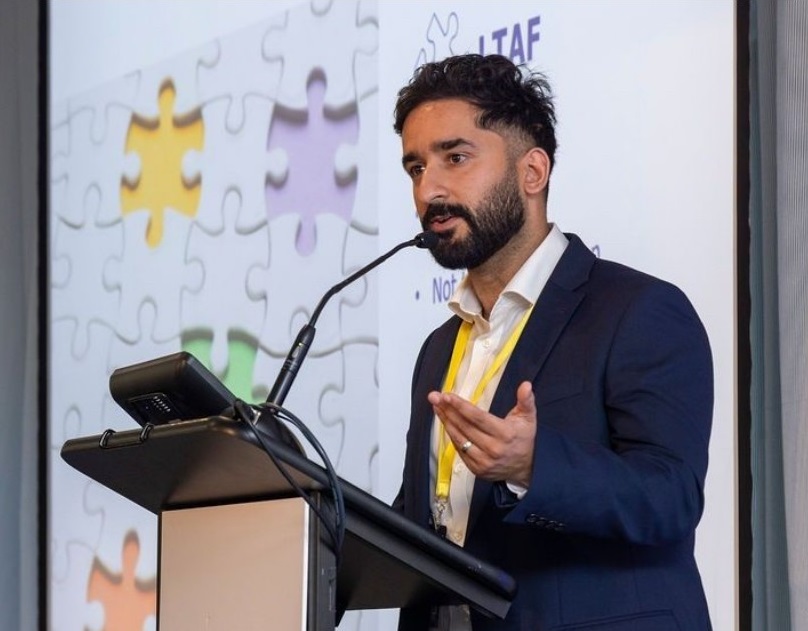
  • Joshun Sandhu: Master Trusts utilising Private Markets

    Joshun Sandhu: Master Trusts utilising Private Markets

    Joshun Sandhu provides a breakdown of how private market access is re-shaping the Defined Contribution market


    Master trusts and private capital

    Master trust pension schemes are being encouraged to allocate to long term private assets while continuing to meet strict governance and daily member liquidity requirements. Trustees must decide whether to access private markets through regulated pooled funds such as Long Term Asset Funds (LTAFs), create fully bespoke solutions, or adopt a hybrid approach that blends elements of both. Each route carries distinct implications for governance, costs and operations, and the choice will shape the long-term risk and return profile of members’ retirement savings.

    Liquidity and structural expertise

    Daily liquidity remains a defining constraint. Members expect to trade their pots every day and administrators are set up to deliver that functionality. Introducing an asset that does not trade daily can create operational issues and potential regulatory concerns over what a member is allowed to buy. Trustees therefore need solutions that fit within existing administration systems or can be blended to provide overall daily liquidity.

    Structural expertise is critical. While trustees focus on investment strategy and member outcomes, the technical design of pooled funds, insurance wrappers and hybrid platforms typically requires input from consultants, lawyers and specialist providers. Trustees should not be expected to master every structural nuance, but they do need enough understanding to evaluate advice and make informed decisions.

    A fast changing market backdrop

    The market environment is evolving rapidly. Industry consolidation among platforms, innovation such as Smart and Octopus Energy, new master trust announcements from providers such as Hargreaves Lansdown and Schroders, and the possibility of further master trust mergers are creating both opportunities and uncertainty. Regulatory support for LTAFs and a growing pool of providers is opening new pathways to private capital. At the same time, government ambitions to increase scale in defined contribution pensions are being positioned as a way to improve private market access, although scale alone does not guarantee better outcomes.

    This combination of regulatory encouragement and commercial activity risks narrowing trustee choice if the market converges on a small number of standardised solutions. Pressure to adopt an LTAF quickly could lead to sub optimal outcomes if strategies are rushed to market or if managers prioritise launching a vehicle before finalising an investment approach. Trustees should test whether new products genuinely meet member needs rather than simply following regulatory signals.

    The appeal and limits of LTAFs

    LTAFs are FCA authorised open ended funds designed to hold less liquid assets. They offer a familiar governance framework, diversification through pooled assets and professional management for schemes of all sizes. Their regulated status makes them accessible and operationally easier for many trustees.

    However, familiarity does not automatically equal safety. Liquidity management is complex and managers may be more experienced at running semi liquid structures than at investing directly in private markets. The manager, not the trustee, is responsible for balancing inflows and redemptions, so due diligence on both the investment strategy and the liquidity process is vital. Trustees must also decide how to communicate redemption policies and valuation practices. In many cases the best approach is to package the investment within a simple solution that focuses on the positive member outcomes rather than technical details that may confuse or alarm savers.

    Bespoke and blended solutions

    Bespoke solutions include segregated mandates, custom pooled funds and unit linked insurance wrappers. A unit linked platform allows trustees to consolidate investments in one place. These structures can be tailored for liquidity, fees and governance and can align closely with member needs if designed cost effectively. All master trusts have the theoretical scale to consider bespoke options, but implementation demands specialist expertise and significant governance capacity. The trade off is longer lead times and higher operational complexity compared to an off the shelf LTAF.

    For many schemes a hybrid model will be the most practical. A modest LTAF allocation can provide diversified private market exposure, while a separate sleeve of strategic assets might be held through a segregated mandate or insurance platform. Listed real estate investment trusts or other liquid private market proxies can provide daily pricing and income to support member trading requirements. Blending different structures is not merely a compromise but a necessary way to integrate private assets into a daily dealing environment. Trustees will need clear rules on switching, liquidity management and member communications to keep the solution transparent and fair.

    Governance first

    Success in private capital investing depends as much on governance as on investment returns. Trustees should start by clarifying their objectives and defining the role of private assets within the default strategy. They need to stress test redemption policies, determine how much illiquidity can be tolerated and evaluate costs at both the investment and administrative levels. Communication remains central. Trustees must explain to members why private assets are being used and how the chosen structure protects their interests, while avoiding unnecessary complexity in messaging.

    Long term private assets can enhance diversification and help master trusts deliver better risk adjusted outcomes for members. LTAFs, bespoke structures and hybrid approaches each have merits, but no single solution fits all. Innovation in platform technology and unit linked wrappers is expanding the menu of options, yet governance and clarity of purpose remain paramount. Trustees who match structure to objectives, seek expert advice and maintain rigorous oversight will be best placed to harness private capital for the benefit of their members over the next decade.


  • Unlocking value through diversification, decumulation, and infrastructure

    Unlocking value through diversification, decumulation, and infrastructure

    First published on pensions-expert.com


    Mobius’s Hugh Cutler explores how the defined contribution landscape has changed – and what pension schemes and providers must do to keep ahead of the curve.


    Hugh Cutler, CCO | Mobius
    Hugh Cutler, Mobius


    The UK defined contribution (DC) pensions landscape is undergoing a transformation. The sector, once dominated by basic, liquid investments, is now facing demands for innovation, scale and retirement income solutions – and a growing desire from the government to contribute meaningfully to UK economic growth.

    Driven by the combined forces of auto-enrolment, the decline of defined benefit (DB) schemes, pension freedoms, and the rise of master trusts, the DC market now supports more than 30 million people, if you count both active and deferred members.

    Between trust-based schemes, contract-based arrangements and self-invested personal pensions, UK DC assets are approaching £1.5trn. This is no longer a marginal corner of the retirement system. It is the system.

    With this growth comes a shift in expectations. This is shown through policy initiatives such as the Mansion House Accord, signed by 17 major pension providers that have expressed an intent, on a voluntary basis, to achieve a minimum 10% allocation to private markets across all main default funds in their DC schemes by 2030, with at least 5% of the total going to UK private markets.

    The signatories have signalled a willingness to move beyond the constraints of short-term thinking. But meeting that ambition will require a collective effort to modernise both investment strategy and operational infrastructure.


    Private markets are entering the mainstream

    Three decades ago, when I began my career in pensions, diversification meant adding overseas equities to a portfolio anchored in UK blue chips and gilts. Today’s investment universe for DC schemes is far broader and more sophisticated.

    Driven by the search for higher returns, inflation protection, and diversification, DC defaults are now expanding to include real assets, securitised credit, private equity and infrastructure. More recently, schemes have begun to explore exposure to venture capital, carbon removal strategies and even tokenised assets.

    Much of this change has been enabled by scale. As DC pension schemes grow, they can support more complex, less liquid strategies that were previously inaccessible.

    The Mansion House Accord has given this shift added momentum by offering political and regulatory support for including private markets in DC defaults. Schemes that are already implementing these strategies are showing how private assets can be introduced without breaching fee caps or undermining daily dealing requirements.


    “There remains a significant gap between the leading master trusts and many contract-based or retail DC providers… Closing this gap will be essential if the benefits of diversification are to reach the broader population.”


    Yet there remains a significant gap between the leading master trusts and many contract-based or retail DC providers, whose fund ranges remain dominated by traditional, highly liquid vehicles. Closing this gap will be essential if the benefits of diversification are to reach the broader population.


    Decumulation is the next frontier

    While much attention has focused on accumulation, a quiet revolution is also taking place in decumulation. With an estimated £200bn already in drawdown and the first generation of DC-only retirees approaching, the need for better income solutions is clear.

    These retirees face an unenviable task. They must assess how long they are likely to live, estimate their retirement costs, and manage both sequencing risk and inflation exposure. Very few solutions on the market address these risks holistically. Even fewer do so at a reasonable cost.

    As a result, we are beginning to see growing interest in decumulation strategies that resemble DB run-on portfolios. Unlike accumulation portfolios, which focus on growth, run-on strategies prioritise stability, income generation, longevity risk, and liability matching.

    These approaches combine income-generating assets with inflation protection, using a wider range of instruments than most DC schemes currently allow. A decumulation default may eventually emerge as the natural next step for those leaving the accumulation phase.


    Overcoming operational barriers

    Despite the investment case for broader diversification and decumulation-ready portfolios, UK DC schemes still face unique and sometimes limiting operational requirements. Unlike DB funds, insurers or endowments, DC schemes must operate within strict constraints such as daily pricing, daily liquidity, and capped charges.


    Person using a pointer to highlight a section of report on screen | Mobius


    These features, while designed to protect members, can make it difficult to adopt complex or illiquid strategies. Many platforms and administrators are still configured around retail models that do not support modern portfolio construction. The result is often a narrow fund selection, higher costs, and a lack of flexibility.

    Some of the UK’s biggest institutional DC schemes use scalable technology and flexible custody arrangements to help reduce costs, minimise cash drag and enable truly diversified portfolios.

    What remains is for the rest of the industry to catch up. Contract-based providers in particular face significant legacy constraints but also a real opportunity to evolve. If the platform infrastructure can be modernised, it will open the door to a new generation of investment strategies that better serve both accumulation and decumulation phases.


    Building better retirements through collaboration

    Private markets, real assets and income-generating strategies have long been used by DB schemes and insurers. The challenge for DC is not invention but adoption.

    This requires collaboration. Product providers, platforms, advisers, consultants and regulators must work together to find solutions that meet regulatory requirements while offering members better outcomes. That includes being open to shared infrastructure, pooled vehicles and standardised reporting frameworks that reduce operational friction.

    The structural foundation matters too. A life fund structure can bring benefits to help meet the operational and compliance needs of DC schemes, especially within default arrangements. Life wrappers also support smoother administration, better pricing aggregation, and alignment with charge cap requirements.

    Together, these features allow schemes to build portfolios that are institutional in quality but operationally practical for a DC environment.

    To achieve this, the industry must be willing to move beyond legacy models. Much of the complexity in DC investing is not technical, it is cultural. When we draw on the experience of schemes that have already made this shift, we unlock an era of investments unbound, where portfolios are built not by what has always been done, but by what delivers the best member outcomes.

    The Mansion House Accord has set a clear direction. The task now is to turn ambition into implementation. If we succeed, millions of savers will enter retirement with more resilience, greater flexibility, and better financial futures.


    Hugh Cutler is chief commercial officer at Mobius.

  • Navigating the Decumulation Dilemma: Watch Hugh Cutler’s Presentation

    Navigating the Decumulation Dilemma: Watch Hugh Cutler’s Presentation

    Back in October, our Chief Commercial Officer, Hugh Cutler took part in a webinar hosted by The Virtual Panel.

    This webinar was titled: ‘The Decumulation Dilemma’, in Hugh’s section he explores the complexities of managing retirement income, the impact of increasing volatility, and the benefits of a flexible open architecture approach to building decumulation solutions.

    You can view Hugh’s section below (Duration 8:19):


    If you would like to discuss any of the topics raised in this video or would like to discover how Mobius can assist you further we would love to hear from you.

    Get in touch


    The full replay of the webinar is also available to watch on-demand. Featuring speakers from Berenberg, Standard Life and Hymans Robertson you can view the webinar replay below. (Registration required).

    Click here

    • Video transcript

      With 30 years of investment experience and now working for Mobius, who’s kind of the, well, we think we’re the leading platform, but a leading platform, offering solutions for DC and I’m also the son, grandson, and brother of doctors. So if, anyone should know how to plan for retirement, it should be me. But, in fact, I don’t. I was made better, made to feel a bit better about that because someone with twice my IQ and twice more than twice my experience also admitted to finding it tough. This is Bill Sharpe of the Nobel Prize for economics and the inventor of the sharp ratio. He said this is the hardest problem in finance. He also said it’s the nastiest problem in finance because running out of money in retirement, isn’t a whole lot of fun.

      So why is it so hard? I think you’re probably familiar with, with these things, there’s just too many unknowns. The investment returns are, are unknown. You don’t really know your income needs. You don’t know if you’re going need care or, what else you’re going to come up in, retirement. You obviously don’t know your life expectancy if you don’t know how long you’re actually going to live, and there’s massive variation in that. Tax is complicated and it’s also variable and might be changing as soon as the end of the month. So, there’s always things to worry about there. Then you have this big issue of path dependency or sequencing risks, which sort of impacts your returns in retirement and makes the investing problem, pretty complicated.

      So we’ve all heard of pound cost averaging and when you are paying into your pension you put the same amount in every month and you buy more shares when the markets are down and less when they’re up, but in the end, you end up buying at a cheaper average price. Volatility actually kind of helps you, in terms of enhancing your returns a little bit. But when you’re taking money out, you have the opposite effect, and it makes a huge difference. So you take the same amount out every month, but when markets are down, you are selling a lot of shares effectively, and this volatility really hurts you. We try to kind of get a bit of a handle on that.

      How, how painful is that? How important is it? What can you do about it? So we ran a little, simulation and we took an example investor. We said they start with a million pounds. because it makes the numbers round. As we saw from Mark’s numbers, that’s obviously a very big pot, but the numbers scale of course. So you start with a million pounds, and you take out £40,000 a year increasing with inflation. If you don’t have any volatility and you just get a very steady return, that money lasts for 34 years. But if you start to run with volatility at 10% volatility, which might be like a balanced fund kind of level, it lasts less than 30 years because of this sequencing or pound cost averaging issue. At 15% vol, which is kind of more like a global equity portfolio or something might be, it’s actually under 25 years. These are just the averages, like the medians of what happens. Actually, when you run it and look at kind of what are the bad cases, often with these sort of 10% or 15% volatility, the money runs out in 10 years. So you just end up, end up withdrawing at the wrong time.

      This was a kind of theoretical model of how much difference it makes. Then I was very lucky, this week, I saw on LinkedIn a firm called Albion had come up with this example, which I thought was a really good way of describing it. They started with a million pounds in the year 2000 and took out £50,000 pounds a year increasing with inflation and left the money invested in equities. Basically, you ran out of money by 2023. What happened was you had the tech crash in the early two thousands, so you lost a lot of money, but you’re still taking this 50 grand a year out and plus inflation, et cetera. And then just when you thought things were okay, you had the global financial crisis. You can see that in the chart and then your money (although you were getting good returns for most of the last decade) just trickled away and by 2023 you had nothing left. Now what happens if we run history backwards? If you did 2023 first and then 22, then 21 backwards through time, turns out that after 23 years having taken 50 grand out a year, you’ve still got a million left at the end of it. So it just makes so much difference when you start and what the risk profile is.

      So, you have to be thinking really hard about this problem of how do you build portfolios that are going to be resilient in drawdown. What you’re trying to do is to minimize the variability of the income and also keep the capital value stable as possible. So you can take out whether it’s 4% a year or 5% a year, whatever level you’re trying to take out you can take that out without really suffering this sequencing risk. So things like index tracking global equities are pretty hard to beat when you’re 20 and you’re investing for a 40-year time horizon without touching your money and you’re just putting contributions in. But for this sort of, investment problem, the assets that do well are portfolios of things like private credit, high-yielding bonds, asset-backed securities. Real assets, infrastructure, real estate, income generating, equity income strategies, and then protected strategies, things that are using, options or other structures to try and reduce volatility, but still give stability of return. That’s exactly what, Berenberg do, and we’re going to hear about that, in a minute. Then not only do you have to have all of these ingredients, but you then need to bring them together into a solution.

      So how do you do that in practice? Well, the first thing, you need a lot of strategies. You’ve got to have a lot of flexibility so you can include all of these, like private markets, leverage loans, structured equity, sort of complicated strategies. You can’t just do it using like daily dealing, usage-type funds. You need to think about things like tax efficiency. Things like withholding taxes that UCITS funds pay on equity income is a big problem in retirement because you’re looking for these income strategies. Obviously you need to look at getting low fees and high scale.

      We think openness is really important. If you want structured equity, Berenberg, might be the people you want to speak to, but if you want to buy a private credit strategy, it could be someone else and it might be someone else for, for high yield. Then you need to think about the kind of the features that, that you’re going to need to build into it. So obviously income-paying strategies, because that’s the point, right? You’ve got to pay income out of these solutions. If you’re going to do longevity pooling, how do you think about structuring that into your investment solution? And then to deliver all of that, it’s a massive technology challenge. Huge volumes of trading, a lot of members, a lot of rebalancing, and a lot of different sorts of packages of funds.

      So hopefully that, that kind of brings together some of the problem and the theory and also maybe, you know, a few ideas about how you can think about solving the problem in practice.

  • Innovating to support DC schemes

    Innovating to support DC schemes

    The defined contribution (DC) pension market is maturing all the time, and at Mobius we continue to innovate to ensure our services stay ahead of the emerging needs of our clients.

    As it’s January, we thought we’d take the opportunity to remind you about some of the DC subjects we wrote about last year – and how our platform capabilities can help DC schemes to achieve their members’ retirement income goals.

    Manufacturing retirement-ready funds: In March we wrote about our capability to manufacture funds to meet specific pre-retirement objectives. These include drawdown-ready default funds and to-and-through retirement income generating funds. We’ve also manufactured funds designed to give annuity-like returns and funds designed for different age cohorts. You can read the full article on LinkedIn, here.

    Evolving a pension administration eco-system. Wouldn’t it be fantastic if all the suppliers involved in delivering DC pensions could work together? These include consultants, investment managers, investment and member administration, governance, banking and data reporting providers as well as a host of other support services. Well, in May we wrote about how Mobius is helping to nurture a pension eco-system which brings together all the key providers involved in delivering workplace pension solutions. You can read the full article on our website here.

    Pooled fund proxy voting – the Mobius platform approach. We know the government is keen to encourage pension schemes to vote their shares to support the policies set out in their Statements of Investment principles. In August we wrote about how Mobius is powering DC schemes invested in some of the pooled funds on our platform to vote. You can read the full article on the Mobius website, here.

    More than just admin – the Mobius way. In September we wrote about how our clients benefit from capabilities which meet more than just their routine administration needs. These include access to investment in real assets or LDI solutions, specialist transaction cost and climate reporting and much more. You can learn more about these capabilities in this article here.

    Delivering data for pension dashboards. We believe pension dashboards will be a game-changer, driving peoples’ engagement with their pensions and ultimately leading to a higher, more sustainable incomes in retirement. But they won’t get far without quality data. In November, we wrote about how Mobius already holds schemes’ pricing data and can feed this into dashboard providers’ systems, using data standards and formats they require. You can read the full article here.

    This is just a snapshot of the range of services and capabilities we provide to DC schemes and over the next year, we’ll be regularly writing articles to highlight our wider capabilities. If you’d like to know more now, rather than wait, please email or call us today we’d be happy to tell you more.

    Thank you for reading this blog, to find out more about Mobius, please visit our home page.

    If you would like one of our team to contact you, please click here.

  • Innovating to meet the needs of our clients in 2022

    Innovating to meet the needs of our clients in 2022

    2022 has of course been a challenging 12 months for many. At Mobius we’ve worked hard to deliver another year of high-quality investment administration and we’ve continued to innovate to respond to the emerging needs of our clients. Highlights of the year include:

    Preparing schemes for buyout with targeted basket of gilts holdings: We developed our capabilities to buy and hold a bespoke basket of direct gilts to support schemes moving to buyout with insurers. We have the ability to leverage our broker/dealer and custodian relationships to buy and hold direct gilts on the platform within our life company structure as part of a scheme’s transition to an insurer. We believe Mobius is the only institutional platform to offer a direct gilt purchase solution of this type.

    Providing greater control to investment managers for private market and private equity transactions: Asset allocation exposures may benefit by exerting greater control over the timing and price limits of trading certain illiquid investments. We recognised the benefit this brings to solutions which Scheme CIOs or fund managers create, by allowing direct access to our broker/dealers. This gives them greater control, while providing comfort that all transactions and administration are processed and recorded on the Mobius platform.

    Breaking down barriers to make real assets available to DB schemes: Many DB schemes seek returns from illiquid real assets such as sustainable assets, social housing, low carbon assets, healthcare, education and digital infrastructure. Yet for many smaller investors these are difficult to access due to the high levels of governance required and complex fund structures. We have innovated by using the power of the Mobius platform to make real asset strategies available to DB schemes.

    Enabling schemes to exercise their proxy voting power: The government has made it clear schemes will be expected to use their voting power to support their climate change investment strategies. We worked with schemes to design solutions which enable them to vote on the shares they own. This pioneering approach is the start of enabling direct influence and is only possible due to Mobius’ investment administration capabilities.

    Developing solutions for DC schemes: We have developed a solution offering a selection of manufactured funds designed to provide schemes with access to a wide range of sophisticated investment strategies which may not normally be available to them. We anticipate that the first clients will be able to utilise these strategies soon.

    ….and of course, there’s LDI: Like all parties involved, Mobius had to respond to the unprecedented spike in collateral calls following the mini-budget and subsequent turbulence in the gilt markets. The UK pensions industry has never experienced such a surge in the volume of trading activity coupled with accelerated and compressed timeframes. Mobius adapted to help deal with these unique circumstances, underlining the ability of our platform to flex to meet our clients’ needs.

    Industry recognition: Finally, we were delighted to be recognised again with yet another pensions award. Mobius won the Institutional Investment Platform of the Year Award at the UK Professional Pensions Awards 2022. This is the fourth year in succession Mobius has won the award.

    We couldn’t have won the award without the support of our clients and their advisers, who continue to trust us to deliver the highest standards of investment administration, so a massive thank you to all! We will continue to work hard to meet your needs in 2023 and to innovate to respond to changes and emerging demands in the pensions industry.

    Wishing all of you all the best for the festive season and the New Year

    See you in 2023 !

  • Making real assets accessible to all pension schemes

    Making real assets accessible to all pension schemes

    But the real shame is the advantages of real assets have often been harder for smaller schemes to access. Higher costs, illiquidity, lack of daily valuations and high minimum investment limits are seen as a barrier by many.

    Now, with resurgent inflation, many smaller DB and DC schemes are likely to want to reconsider their position and benefit from the potential inflation hedges offered by some real estate and infrastructure investments.

    The good news is the Mobius platform has the flexibility and capabilities to handle private assets and other illiquid investments for DB and DC schemes of all sizes.

    We’ve invested in flexible technology which means we can host funds on the platform which are not daily priced – and we can report effectively on these assets to trustees and their advisers.

    We’re also able to help ‘lower governance’ schemes to invest in private asset funds with high minimum investment limits. Our ability to aggregate holdings gives smaller schemes access to these alternatives on a cost-effective basis.

    At Mobius we have the technology, flexibility and access to illiquid funds to help our clients reap the benefits today. If you would like to find out more, please contact us.