Category:

Pension Strategy

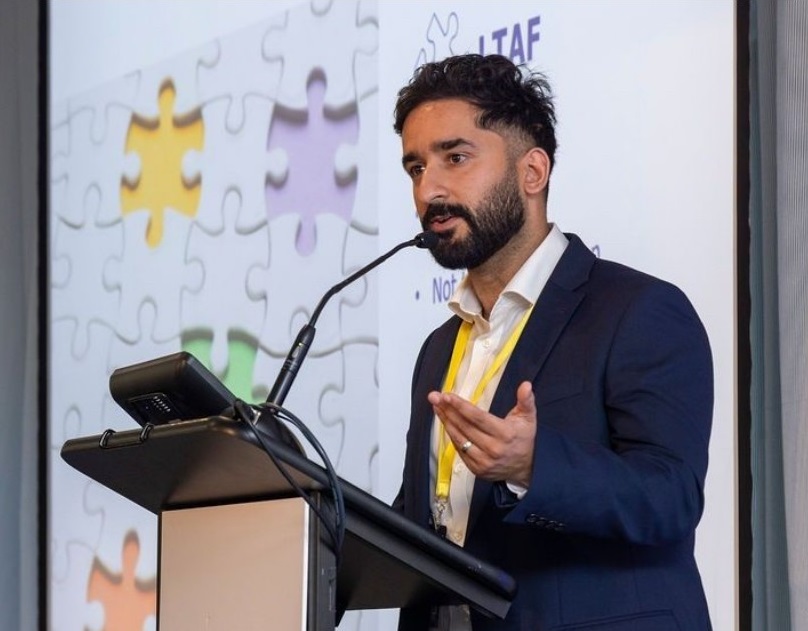
Joshun Sandhu: Master Trusts utilising Private Markets

Joshun Sandhu provides a breakdown of how private market access is re-shaping the Defined Contribution market


Master trusts and private capital

Master trust pension schemes are being encouraged to allocate to long term private assets while continuing to meet strict governance and daily member liquidity requirements. Trustees must decide whether to access private markets through regulated pooled funds such as Long Term Asset Funds (LTAFs), create fully bespoke solutions, or adopt a hybrid approach that blends elements of both. Each route carries distinct implications for governance, costs and operations, and the choice will shape the long-term risk and return profile of members’ retirement savings.

Liquidity and structural expertise

Daily liquidity remains a defining constraint. Members expect to trade their pots every day and administrators are set up to deliver that functionality. Introducing an asset that does not trade daily can create operational issues and potential regulatory concerns over what a member is allowed to buy. Trustees therefore need solutions that fit within existing administration systems or can be blended to provide overall daily liquidity.

Structural expertise is critical. While trustees focus on investment strategy and member outcomes, the technical design of pooled funds, insurance wrappers and hybrid platforms typically requires input from consultants, lawyers and specialist providers. Trustees should not be expected to master every structural nuance, but they do need enough understanding to evaluate advice and make informed decisions.

A fast changing market backdrop

The market environment is evolving rapidly. Industry consolidation among platforms, innovation such as Smart and Octopus Energy, new master trust announcements from providers such as Hargreaves Lansdown and Schroders, and the possibility of further master trust mergers are creating both opportunities and uncertainty. Regulatory support for LTAFs and a growing pool of providers is opening new pathways to private capital. At the same time, government ambitions to increase scale in defined contribution pensions are being positioned as a way to improve private market access, although scale alone does not guarantee better outcomes.

This combination of regulatory encouragement and commercial activity risks narrowing trustee choice if the market converges on a small number of standardised solutions. Pressure to adopt an LTAF quickly could lead to sub optimal outcomes if strategies are rushed to market or if managers prioritise launching a vehicle before finalising an investment approach. Trustees should test whether new products genuinely meet member needs rather than simply following regulatory signals.

The appeal and limits of LTAFs

LTAFs are FCA authorised open ended funds designed to hold less liquid assets. They offer a familiar governance framework, diversification through pooled assets and professional management for schemes of all sizes. Their regulated status makes them accessible and operationally easier for many trustees.

However, familiarity does not automatically equal safety. Liquidity management is complex and managers may be more experienced at running semi liquid structures than at investing directly in private markets. The manager, not the trustee, is responsible for balancing inflows and redemptions, so due diligence on both the investment strategy and the liquidity process is vital. Trustees must also decide how to communicate redemption policies and valuation practices. In many cases the best approach is to package the investment within a simple solution that focuses on the positive member outcomes rather than technical details that may confuse or alarm savers.

Bespoke and blended solutions

Bespoke solutions include segregated mandates, custom pooled funds and unit linked insurance wrappers. A unit linked platform allows trustees to consolidate investments in one place. These structures can be tailored for liquidity, fees and governance and can align closely with member needs if designed cost effectively. All master trusts have the theoretical scale to consider bespoke options, but implementation demands specialist expertise and significant governance capacity. The trade off is longer lead times and higher operational complexity compared to an off the shelf LTAF.

For many schemes a hybrid model will be the most practical. A modest LTAF allocation can provide diversified private market exposure, while a separate sleeve of strategic assets might be held through a segregated mandate or insurance platform. Listed real estate investment trusts or other liquid private market proxies can provide daily pricing and income to support member trading requirements. Blending different structures is not merely a compromise but a necessary way to integrate private assets into a daily dealing environment. Trustees will need clear rules on switching, liquidity management and member communications to keep the solution transparent and fair.

Governance first

Success in private capital investing depends as much on governance as on investment returns. Trustees should start by clarifying their objectives and defining the role of private assets within the default strategy. They need to stress test redemption policies, determine how much illiquidity can be tolerated and evaluate costs at both the investment and administrative levels. Communication remains central. Trustees must explain to members why private assets are being used and how the chosen structure protects their interests, while avoiding unnecessary complexity in messaging.

Long term private assets can enhance diversification and help master trusts deliver better risk adjusted outcomes for members. LTAFs, bespoke structures and hybrid approaches each have merits, but no single solution fits all. Innovation in platform technology and unit linked wrappers is expanding the menu of options, yet governance and clarity of purpose remain paramount. Trustees who match structure to objectives, seek expert advice and maintain rigorous oversight will be best placed to harness private capital for the benefit of their members over the next decade.


By 0 Comments

Laura Catterick: Pooling scale for better outcomes in investment implementation

First published on corporate-adviser.com


Laura Catterick provides insight on the benefits of pooling scale


Image: Laura Catterick, Mobius


One of the most consistent themes in institutional investment is the search for efficiency. Pension schemes and other long-term investors want access to high-quality investment strategies at low fees, without leakage through tax, transaction costs or unnecessary administration. They also want to avoid governance burden and operational risk. Scale is the lever that makes this possible.

Fiduciary managers often emphasise the scale benefits they can bring to smaller pension funds. But investment platforms can unlock the same advantages – whether appointed directly by trustees, through a fiduciary manager, or as part of an implemented consulting solution.

By aggregating mandates across multiple clients, both fiduciary managers and platforms can negotiate significant discounts from asset managers. Those savings are passed through to schemes, meaning that small and mid-sized schemes can access institutional pricing typically reserved for the largest investors.

The benefits go beyond cost. Investment platforms deliver operational efficiencies by handling trading, rebalancing and transitions, providing consolidated reporting, and reducing the complexity of managing multiple counterparties. For trustees, this means less time spent on administrative detail and more time focused on strategic questions. For managers, it means a more efficient route to market and reduced need for bespoke client-by-client solutions.

Pooling also helps to manage risk. Fragmented arrangements leave more scope for delays, mismatched trades or reporting errors. A single investment platform reduces these risks, enabling schemes to meet fiduciary and regulatory obligations with greater confidence. Aggregating investors also makes it possible to access strategies with high minimum allocations, and to use fund structures that minimise tax drag – for example, reducing withholding tax on overseas equities. And by bringing together investor activity, platforms can lower transaction costs by crossing trades and avoiding bid/offer spreads.

Importantly, the value of scale is amplified when combined with open architecture. Schemes should not have to compromise on manager selection or asset class exposure. An open-architecture investment platform enables trustees and fiduciary managers to choose from the full universe of strategies, whether mainstream equity and bond mandates, specialist sustainable funds, or innovative private market allocations. This flexibility ensures that scale savings do not come at the expense of investment choice, but instead broaden the opportunity set available to members.

A life wrap structure takes this further by integrating diverse investments into a single, efficient framework. Life wraps allow schemes to combine pooled funds, segregated mandates and alternative assets under one tax-efficient structure. That brings consistency to pricing, simplifies reporting and governance, and makes it easier to evolve portfolios as member needs change, for example, shifting from accumulation into decumulation without operational disruption. For trustees, it means clear oversight and reduced administration. For members, it means potentially smoother more predictable investment journeys and the potential for better long-term outcomes.

There is no one-size-fits-all model. Some schemes will continue to see value in giving fiduciary managers full discretion. Others will prefer to retain strategic control and work with an adviser. The important point is that in either case, the benefits of scale are available when an investment platform is used for implementation. Fiduciary managers can focus on strategy and governance, while the platform delivers efficiency and scale. Equally, advisers and trustees can work directly with the platform, retaining control but still gaining institutional pricing and operational strength.

This complementarity makes the investment landscape more flexible than ever. A small scheme can use a fiduciary manager and still benefit from investment platform implementation. A larger scheme, with in-house expertise, can retain manager relationships while accessing pooled terms through a platform.

Ultimately, the lesson is clear. When pooled intelligently, scale reduces costs, strengthens resilience and improves outcomes. And when combined with open architecture and a life wrap structure, it also delivers choice, transparency and adaptability. The challenge for trustees is to decide how best to capture those benefits within their governance framework. Whether through a fiduciary manager, an investment platform, or both, the opportunity exists to enhance member outcomes by aligning cost efficiency with operational excellence.

As fee structures evolve and schemes mature, the ability to harness scale without sacrificing flexibility will only grow in importance. The key is recognising the full range of options now available, and making the most of the economies of scale accessible to schemes of every size.

By 0 Comments

Laptop on desk in office | Mobius

Breaking the Retirement Mould: New Approaches for Member Success 12 December 2024

Read time: 4 mins

Welcome to Mobius’ new series exploring how pension schemes can deliver better outcomes for their members. Spoiler: they might need to invest differently.

From private markets and new investment vehicles to the transformative power of technology, we’ll explore how pension schemes can evolve to meet modern members’ needs. In this first article, we look at why traditional pension approaches are no longer fit for purpose and explore how private markets could transform member outcomes.

Pick up any retirement brochure and it will invariably feature an elderly couple walking on a beach with a dog. But a new breed of scheme member is tearing up this image. Retirement is no longer a destination, reached by a single road.

Members now save at varying levels, retire at different times and have different ideas about how to spend the final third of their lives. They need investment solutions that are as flexible and varied as they are.

While needs have become progressively individual, investment solutions often cater to the masses. Many investment management tools were forged in a world of final salary pensions where people uniformly placed their carriage clock on the mantelpiece at 65. That world has gone. A new world of possibilities is rising in its place.

Regulations Bring Challenge and Opportunity

Existing and incoming regulations signal a new direction. Schemes are obliged to consider the impact their investments have on people and the planet. Incorporating illiquid assets and infrastructure investments into defined contribution (DC) schemes is now a must. Stipulations to invest in the UK promise to stoke homegrown companies. Even though pension schemes have few avenues to do so.

At the same time, consumer duty demands that pension schemes look beyond mere cost to focus on member experience, choice and value for money. The new law asks that pension schemes deliver ‘good outcomes’ for members. A noble concept that is tricky to define, quantify and evaluate.

While these requirements have good intentions, they inadvertently threaten to put pension schemes in a box at a time they need to be thinking outside one. There is a critical mismatch between what members and regulators demand, and what pension schemes can achieve with the tools at their disposal. New solutions are urgently needed to navigate this shifting landscape. The good news is that many already exist.

Investment solutions to improve member outcomes are already circulating in the pensions universe. All too often they are disconnected, out of reach or remain ideas that haven’t been rendered into reality. But they are achievable with the right people, technology and spirit. We know because we deliver them every day.

Change Will Be Driven by Private Capital

Private markets have historically been off limits for DC schemes, stifling diversity and potentially handsome, stable returns for members.” – Mobius

While there is no consensus on what a ‘good outcome’ is, it is often linked to better returns. That’s why one of the biggest conundrums is how to give DC schemes better access to the lucrative private markets. Private markets have historically been off limits for DC schemes, stifling diversity and potentially handsome, stable returns for members.

Vast swathes of the world’s fastest growing companies aren’t publicly listed. In fact, nearly 90% of established businesses and commercial real estate around the globe are privately owned. By shunning private markets, pension schemes are resisting opportunities that span different geographies, sectors, and risk appetites. This includes companies operating in tantalising areas such as digitisation and climate tech. As the winds of change blow across developed economies, these companies may leave their publicly listed peers in the shade.

Meanwhile, the world of listed companies is shrinking. While savers are still partial to the stock market, companies are less keen. The number of companies going public has been dwindling around the globe. In the UK, some 2,700 were listed on the London Stock Exchange in 1996. By the end of 2022, this figure had tumbled 60% to 1,100.

Engines of change such as AI will be fueled by private capital. Private markets are perfectly placed to benefit from the structural changes that are reshaping the world we live in. Pension members can’t be denied access to some of the world’s most exciting, and potentially very lucrative, opportunities.

This is Part 1 of our series on improving member outcomes. In Part 2, we’ll explore how new investment vehicles are opening up private market opportunities for pension schemes, followed by deep dives into technology’s role in transforming pensions, member engagement strategies, and innovative approaches to decumulation.

If you would like to discuss any of the points raised in this insight or would like to learn how Mobius can assist you further we would love to hear from you.

Speak to a member of our team

By 0 Comments

Close up of side of tell commercial building in city of London | Mobius

Evolving a pension administration eco-system

It would be fantastic if all these services could be delivered in one place by one supplier – but for real, practical reasons, schemes need to rely on a range of different suppliers to meet their needs.

It would also help if the different suppliers were all used to working collectively, to provide a best-in-breed solution, where straight through processing and integrated systems worked seamlessly together.

The perfect pension administration eco-system is gradually emerging, like the butterfly from its chrysalis, and at Mobius Life we’re helping to nurture this process. Our wide range of client relationships and expertise in collaborative working across the spectrum of service suppliers to pension schemes, means we’re perfectly placed to enable the eco-system to thrive.

We already work closely with all the key providers involved in delivering workplace pension solutions. These include consultants, investment managers, member administration specialists, data and reporting analysts and governance experts. As well as bankers, technology and website suppliers, scheme accountants and member communication professionals.

And because we’re working collaboratively with these suppliers all the time, we know how they operate and we have developed our capabilities to integrate with theirs, making life easier for our clients.

So, the perfect pension administration eco-system may not be fully formed yet – but at Mobius we’re working to help the industry evolve, to deliver better and more efficient holistic solutions to sponsors and in turn improve member outcomes.

And of course, all of this helps to meet the regulators’ requirement that schemes deliver measurable value for money.
If you would like to discuss how the pension administration eco-system might develop and grow, please let us know. We’d be delighted to hear from you.

By 0 Comments

James Finch, CEO | Mobius

Accessing alternative credit on-platform for DB schemes

The shift from traditional bank lenders as a result of tightening regulation since the global financial crisis, has resulted in the financing gap being filled by capital flows from private credit funds. It is a significant and growing market, driven largely by the search for higher yield. S&P Global reports the AUM of funds principally involved in direct lending grew to $412 billion by the end of 20201.

Typically, alternative credit involves non-bank institutions making loans to private companies. These businesses borrowing in the alternative market are usually mid-market private companies who struggle to access traditional bank finance. However, the expansion of private credit has resulted in a wide range of sub-asset classes covering direct lending, leveraged loans, distressed debt, securitised credit, consumer finance, real estate and infrastructure debt.

Private credit funds must undertake rigorous due diligence before investing, and as lending is privately negotiated, managers will generally seek seniority and stronger covenants. These allow investors to access higher yielding opportunities while mitigating some of the associated risks. The problem for many DB schemes however, particularly small to mid-size ones, is how to access and implement alternative credit funds. Investing requires significant levels of governance, the funds can also be illiquid with unique fund structures, and high minimum investment limits restrict access to only the largest schemes.

Now, Mobius has made a range of alternative credit funds available to DB schemes of all sizes on our platform. All the governance is undertaken at the platform level, meaning schemes do not have to jump through numerous governance hoops and cumbersome account opening documentation. Mobius takes on the implementation of these illiquid assets to manage the infrequent dealing cycles and valuations.

All implementation is carried out by Mobius, as we accommodate the complex dealing terms associated with the asset class.

Many DB schemes and their advisers can see the investment potential offered by alternative credit. Now the opportunity is available to far more schemes, thanks to the scale and flexibility of the Mobius platform and the continued investment in our infrastructure. If you want to know more, please get in touch.

  1. S&P Global: Private Debt: A Lesser-Known Corner of Finance Finds the Spotlight.
    https://www.spglobal.com/en/research-insights/featured/private-debt
By 0 Comments

Old british coin | Mobius

Addressing pension scheme investment cost disparity

At the same time there is pressure from the government and regulators to keep costs for members as low as possible. There’s the charge-cap on default funds of 0.75% and the government is planning to stop providers levying a flat fee on members with small pots under £100. Now the Pension Regulator and Financial Conduct Authority has added to the challenge with their Value for Money discussion paper. This aims to ensure members’ funds are “well invested and their savings are not eroded by high costs and charges.” And rightly so!

Efficient operational delivery and execution is key to keeping costs down. One way for schemes to reduce administration cost and risk is to rethink the way the default fund is structured and delivered. Many default portfolios are constructed
using individual funds; managing these at a member level is largely inefficient, introduces risk, increases costs and can confuse members; reducing engagement and possibly member outcomes.

Or is there another way? Using the Mobius platform, pension trustees can benefit from sophisticated, thoughtfully constructed default funds, designed to Trustees’ exact specifications, blended into one or a choice of default funds, simplifying delivery and member communications.

Once trustees have defined their default fund investment strategy, we manufacture it from scratch or replicate an existing strategy, using our expertise and technology to meet our clients’ exact needs in a highly cost-effective manner. We’ve already created multiple bespoke default funds and other specialist funds for DC scheme members, including target date funds, zero-fee index funds, private asset and pooled property funds as well as structured equity solutions.

Efficient delivery models and blended fund structures can help reduce risk, improve schemes’ commercials, in turn helping manage the costs of the growing small-pot problem child. If you want to know more about how we can help you reduce your costs, call us today.

By 0 Comments